The one-clickness of interfaces
We’re moving towards one-clickness of tasks. Apps, micro apps and software are now expected to perform tasks and run commands with the ease of a “click.”
In 2020, which is still pretty recent, we had the patience to wait for design + code + release. With the way we see products being reviewed publicly, the hunger to ship more, better and faster has only risen. Distribution is easier, AI has lowered build cost, and users prefer focused tools.
Writing a note, using --dangerously-skip-permissions, tapping fn to dictate what you want to be written (with Wispr Flow), iOS apps that are literally one function - there is no doubt that interfaces need to be narrow, singular-vision driven and faster for tasks.
Some cool iOS apps that I want to reference here are: Daygram, Opal, Tiimo, Not Boring Apps by Andy Allen. These are primarily one-function or as I may call “one-click” apps. They serve one function which can easily be found in another app alongside nested functions. If I had to draw a diagram, I would say we’re resurfacing functions into separate products that first existed in a nested form.
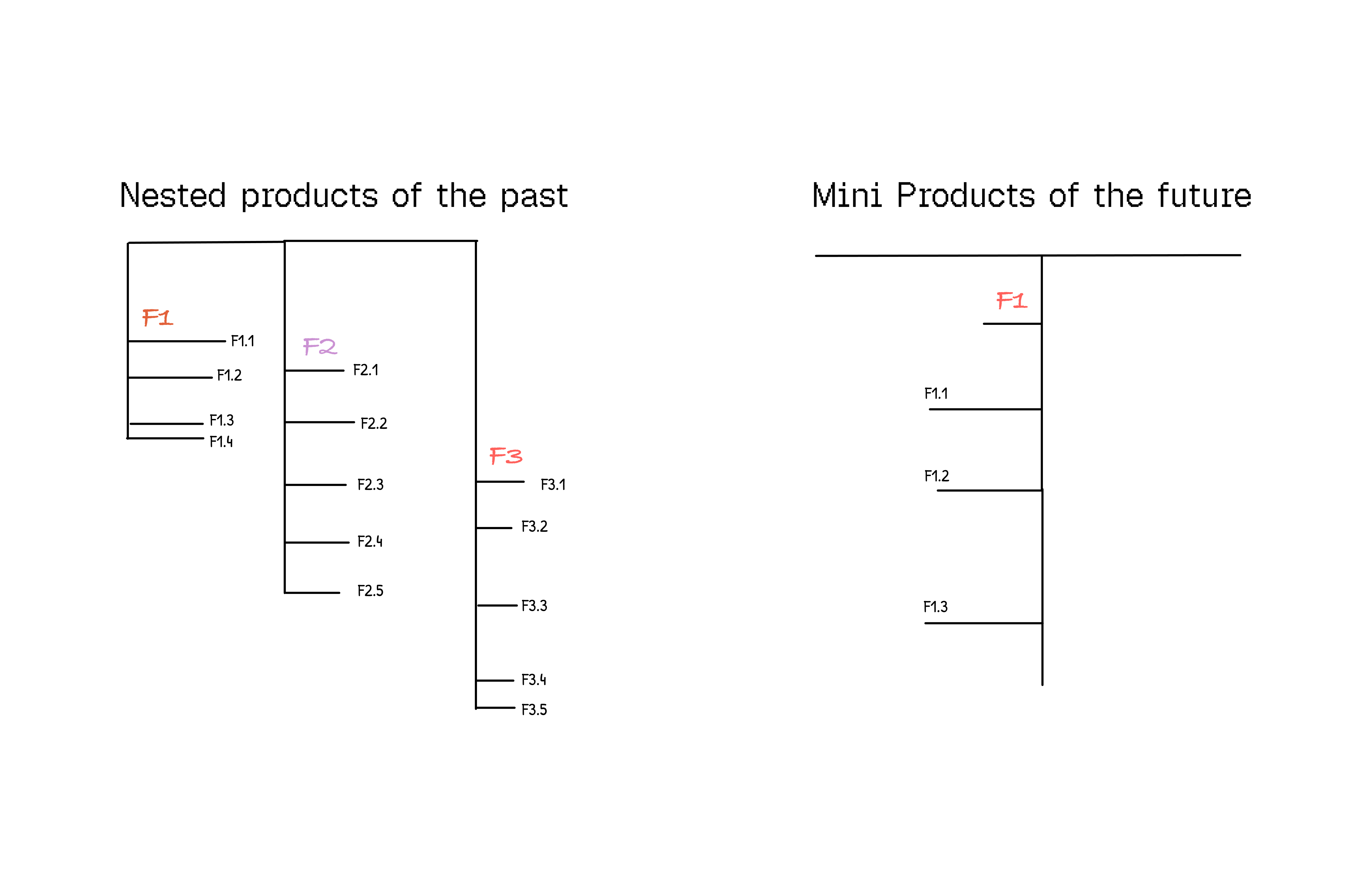
A one-function app / tool / npm install but well crafted and with depth is how I envision the near future of product design. Eventually we may go back to nested functions within products, but riding this wave out may pull a lot of people towards the top. Less R&D, deeper problem solving, quick build, and probably, quick fallout if they aren’t able to grab the market for long enough - which isn’t necessarily bad because the effort put in isn’t as much as a large bloated software/app.